Or: how the category quietly stopped being about you.
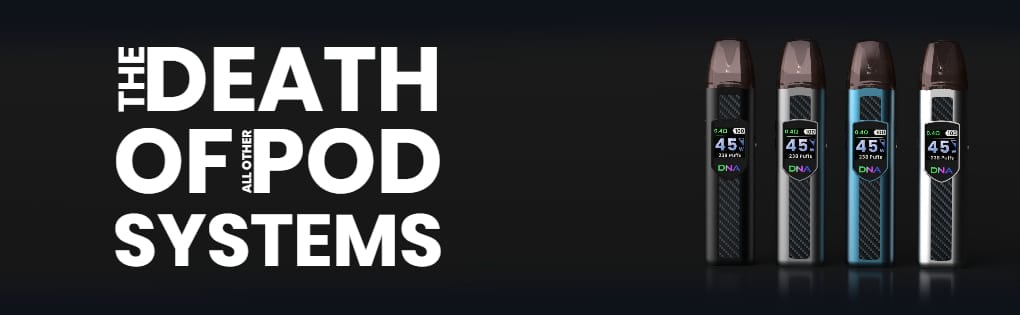
Pod systems were a good idea once.
The pitch was honest. Smaller than a mod. No coil building. No cotton. No leaking RTA in your jacket pocket. You bought a device, you bought pods, you vaped. The first wave of pods — the original Caliburn, the Nord, the early Aspire stuff — were genuinely the simplest decent vape most people had ever owned.
Then the industry noticed something.
Pods are a consumable. Coils are a consumable. And unlike the coils in a sub-ohm tank, you can’t swap the cotton or rewick a pod. When it goes, it goes. You buy another one. Three quid here, four quid there, twice a week, fifty-two weeks a year.
That’s not a vape category. That’s a subscription.
The model took over
Every major manufacturer in the space runs the same model now. The device is the razor. The pods are the blades. The device is sold close to cost — sometimes below it — because the pods are where the money is. A £20 pod kit that burns through £6 of consumables a week is not a £20 product. It’s a £312-a-year product, and the manufacturer knows it the day they sign off the tooling.
That model only works if the pods don’t last.
So they don’t.
Coils burn at the slightest hint of low liquid. Pods leak after a week. Flavour drops off after the first tank. There are exceptions — not many — but the bulk of the category is engineered to a predictable failure curve. Not by accident. By design.
You were sold a device. What you got was a metering system for somebody else’s revenue forecast.
The release cycle did the rest
The other half of the trick was discontinuation.
Every six months, a new pod kit. Same chassis, recoloured. Different wattage cap, slightly different airflow, identical internals. Three paragraphs of marketing copy about “next-generation flavour delivery” with nothing inside the device to back it up. A new SKU, a new launch event, a new wave of marketing.
And critically: the pods from the last device don’t fit the new one.
What it did to the shops
The cycle did not just cost vapers. It quietly broke the independent retail side of the industry.
Your local vape shop carries a pod kit because customers walk in and ask for it. They buy a carton of devices and a carton of pods, set their shelf, and start selling. Six months in, they’re halfway through the stock and the wholesaler quietly stops listing the pods. The new version is out. Pods are different. Old pods are being cleared at cost — if you’re lucky — or written off entirely.
The shop hasn’t done anything wrong. They sold what their customers asked for. The manufacturer changed the SKU underneath them and pocketed the difference.
Multiply that across every pod system on the shelf. Multiply it by the speed of the release cycle. What you get is a retail floor where nobody owns their range — they rent it, six months at a time, at the manufacturer’s discretion. Margins compress. Loyal customers churn through device after device chasing the new thing. The shop ends up running the same churn the manufacturer designed for the consumer, except they’re paying for it twice: once in dead stock, once in customer trust.
A vape shop that wants to stock something they can still sell two years from now has, until now, had almost nothing to point at.
The reviewers saw it coming
The honest end of the review community has been flagging this for years. Pod-life complaints. Coil-life complaints. “Why did this device get discontinued already?” “Why don’t the new pods fit the old kit?” The criticism has been there if you knew where to look.
But the release cycle outran the analysis. Six new pod kits a month, identical internals, different shells — there isn’t a reviewer alive with the bandwidth to take each one apart and demonstrate that nothing’s changed. The volume is the strategy. Drown the signal in noise, and the consumable model keeps running while everyone’s busy unboxing the next one.
The reviewers were not the problem. The release cadence was. And the reviewers, the retailers, and the vapers all ended up on the same side of it — all of them watching a category get worse in slow motion, none of them in a position to stop it on their own.
The thing nobody wanted to fix
The fix is not complicated. It has existed in chipset form since 2012.
Temperature control. Real temperature control — the chipset monitoring what’s happening inside the coil thousands of times a second, pulling power back the moment the wick starts to dry. No dry hits. No burnt coils. Pods last until the liquid is actually gone, not until the user gets distracted for ten seconds and cooks the cotton.
The technology is patented. The patents belong to Evolv. They have been licensing the chipset to mod manufacturers for over a decade — DNA 75, DNA 250C, the boards inside every premium box mod worth owning. And for years, the obvious question was: why hasn’t anyone put this in a pod system?
The answer is that the people licensing the chipset didn’t want to.
Picture the boardroom. A pod manufacturer ships a device with proper always-on temperature control. The pods stop burning. Customers stop replacing them every week. Consumable revenue, the actual business, falls off a cliff inside two quarters. The product is brilliant. The reviews are glowing. The P&L is a disaster.
What would happen next is not a mystery. The chipset and firmware stay exactly as Evolv shipped them — that part is not in the manufacturer’s remit. What they do control is the pod. The next pod revision could quietly ship with a slightly different wick, or coil legs with out-of-tolerance thickness, just enough to throw off the temperature control, or a wick material that degrades faster. Nothing you could point at. Nothing that would show up in a review of the device itself. Just a return to the consumable usage curve the spreadsheet needs — engineered into the only part of the system the manufacturer still controls. And in parallel, the engineering team would send the board to be cloned. It would not work. Fourteen years of patents and iteration is not something you reverse-engineer by staring hard at the finished product. The project would get shelved, quietly delisted, and never mentioned again.
A pod system with proper always-on temperature control is a pod system where the consumable lasts as long as it physically can. Which is the opposite of what the business model needs. The chipset was available. The patents were licensable. Nobody built it, because nobody who could build it wanted to — and the few who might have been tempted understood exactly how the rest of their range would react.
So Evolv built it themselves.

DNA ONE
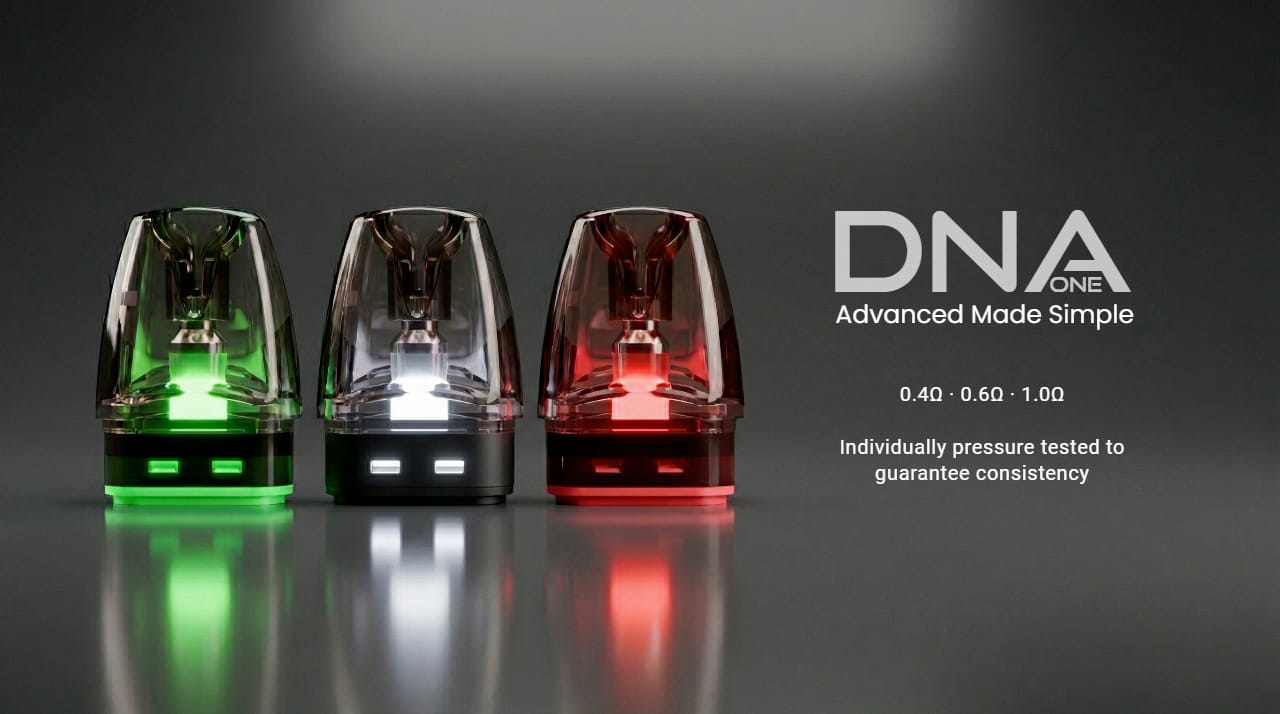
The DNA ONE is the first complete consumer device Evolv has ever made. Not a licensed chipset in someone else’s hardware. Chipset, board, firmware, hardware, pods — all of it designed and produced by the company that invented the technology in the first place.
Three patents do the work.
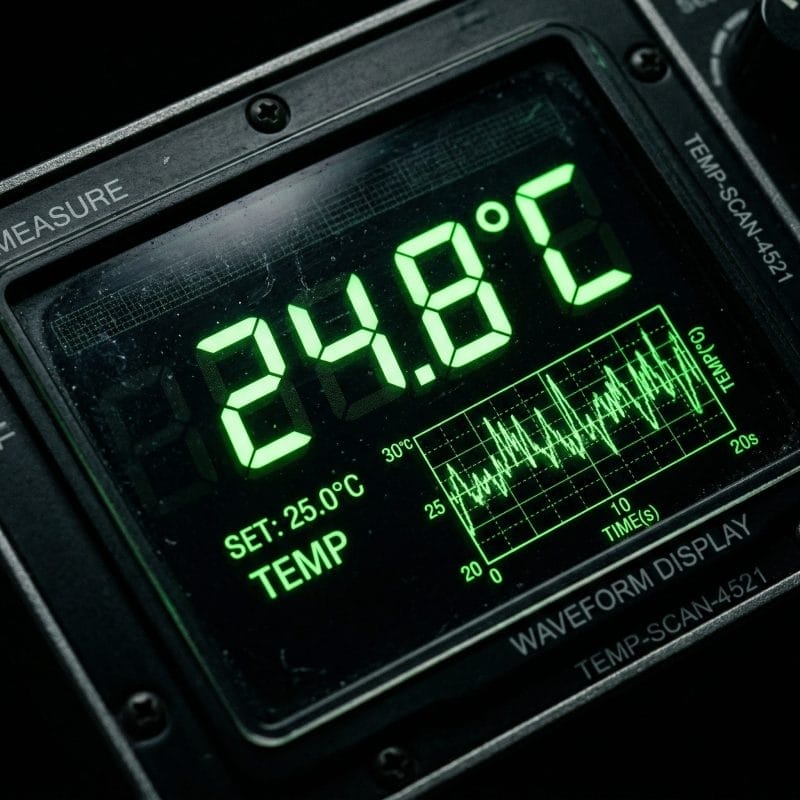
Always-On Temperature Control runs in the background of every puff. It is not a mode you turn on. It is the device. The chipset watches the coil, and the moment the wick starts running dry, the power comes down before you taste it. No burnt hits. No dry hits. Pods that last as long as the liquid lasts. Other manufacturers have licensed pieces of this — none has ever built a device end-to-end around it, because none of them controlled both the chipset and the pod.
Replay is the second patent, and it is exclusive to Evolv. When you take a puff you particularly like, you save it. The device measures the exact power curve, temperature profile, and timing that produced that puff, and reproduces it identically, every time. Same warmth, same draw, same flavour, until you turn it off. No other pod system in the world has this. None will, because none of them can — the patent is Evolv’s, and the chipset to run it is Evolv’s, and the device built around it is Evolv’s.

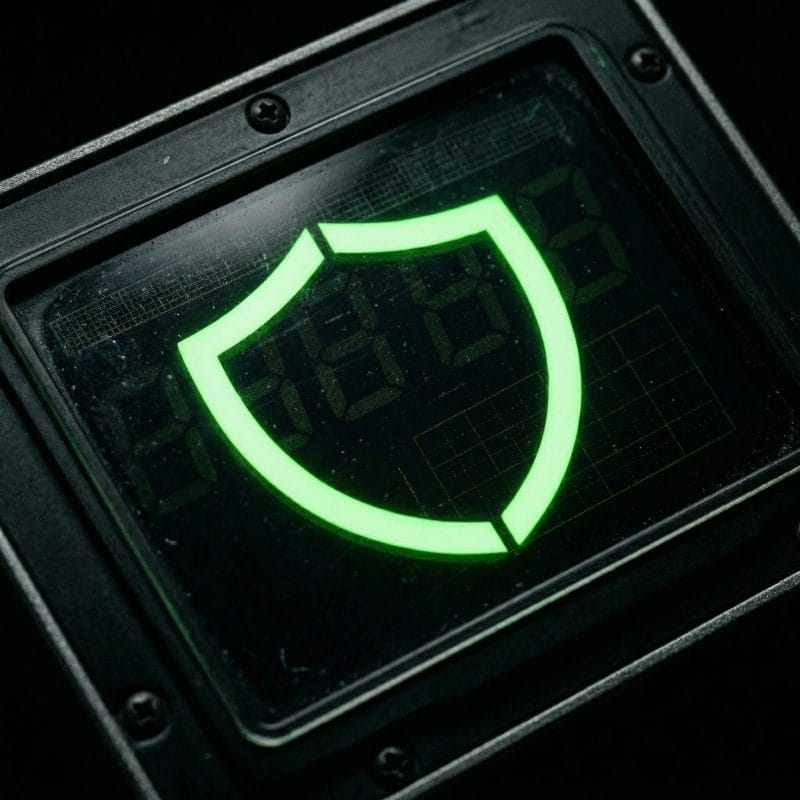
Protect is the final piece, and the newest of the three. Where temperature control prevents the coil burning when the wick is briefly dry, Protect handles the long arc — the moment the pod itself is genuinely running out. It senses the wick drying before the coil ever scorches. It warns you while there is still liquid in the pod. And if you keep firing past the warning, it eventually stops the device firing altogether. The coil never gets the chance to burn. The pod is finished cleanly, on your terms, and the next pod goes in knowing the last one ended properly.
The pods are designed to last as long as the technology allows. There is no artificial replacement cadence. There is no engineered failure. The device tells you when the pod is genuinely done, and not a puff before.
What this means for the category
Pod systems as a category are not dying because people stopped wanting small simple vapes. They are dying because the model finally outran the product.
The pods got worse. The release cycles got faster. The vapers noticed. The reviewers noticed. The retailers noticed. And the manufacturers kept pushing, because the model only works while everyone is still buying.
The DNA ONE is not a pod system in the sense the last five years have taught you to understand the phrase. It is what pods were supposed to be before the industry worked out how to monetise the wear curve. The chipset is Evolv’s. The patents are Evolv’s. The pods are Evolv’s. There is no third party in the supply chain whose business model depends on the consumable failing early.
Same form factor. Same simplicity. Different incentives.
That is the whole difference. It turns out to be most of what matters.
The DNA ONE Founders Edition is available now at StealthVape. The Standard Edition lands next week. Retailers can register interest at evolvdna.com.